


SprintRay Midas.
State-of-the-Art Printing Technology Midas utilises advanced DLP (Digital Light Processing) technology that delivers exceptional resolution and accuracy. This ensures that every detail of your case is captured with precision, resulting in superior fit and finish.
This one's priced per practice. Tell us what you're setting up and a person will come back with a real number, fast.
Midas uses Digital Press Stereolithography (DPS) to print highly filled restorative resins that are too viscous for a conventional 3D printer. A single-use resin capsule replaces the resin, tank and build platform, so restorations are designed, printed and finished chairside.
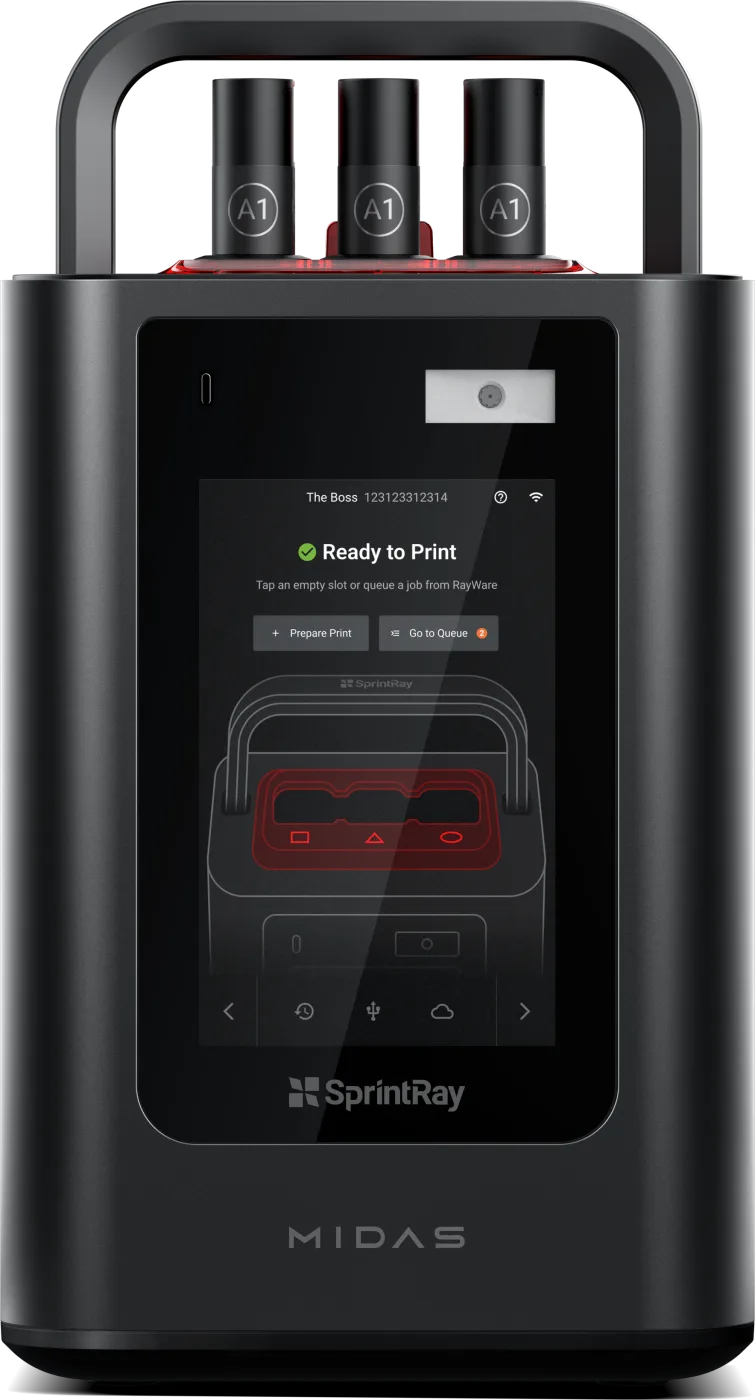
The new standard for chairside
Conventional printers can't use highly filled, highly viscous restorative resins. Midas presses those materials instead, from a unit small enough to sit almost anywhere.
- No viscosity limitations
- Small footprint, high output
- AI restoration design
- Multi-restoration printing
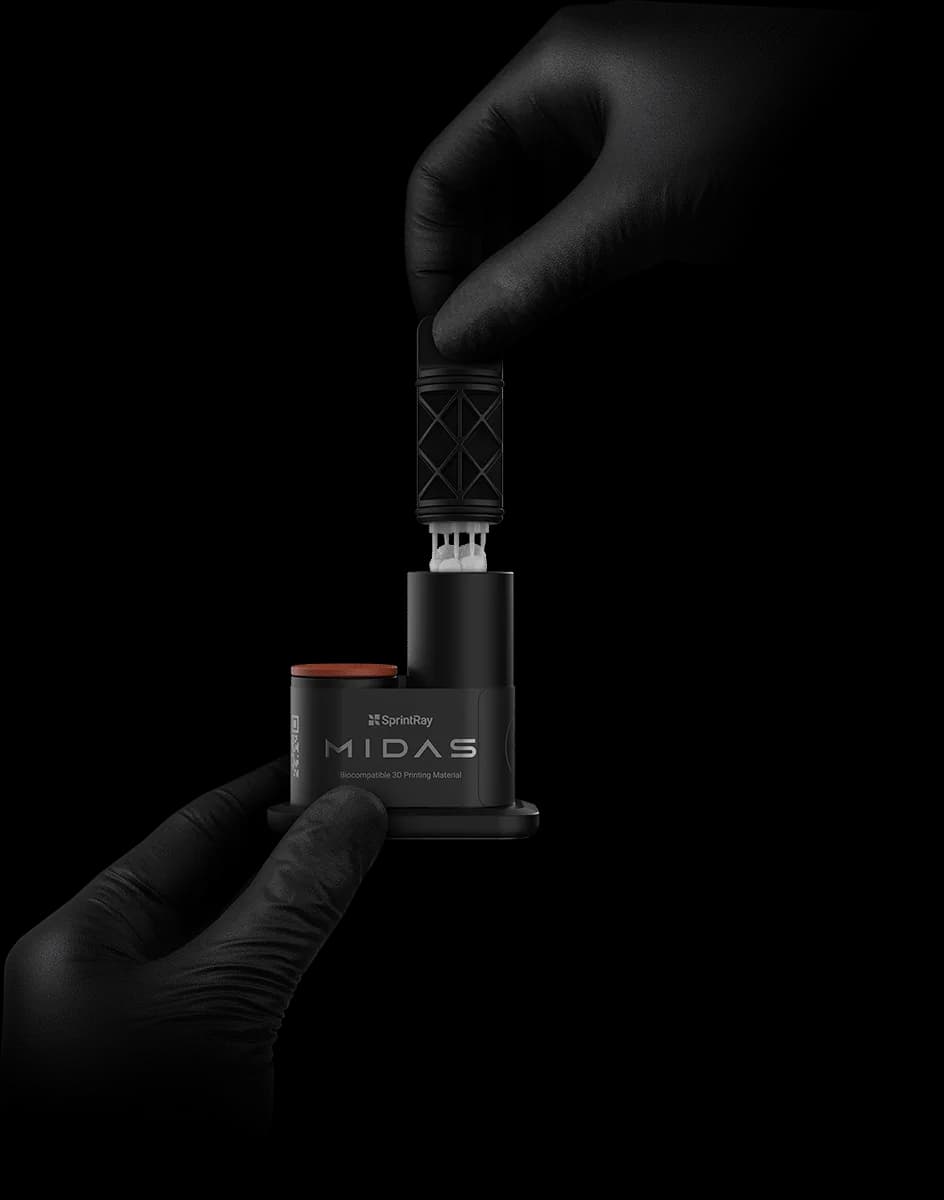
Single unit and multi unit capsules
At the heart of Midas is a resin capsule that combines material and build platform in a single-use format. The Single Unit capsule prints up to 3 at once; the Multi Unit capsule has more than 3x the build area, for bridges and other larger restorative work.
- Every capsule is coded with material, shade, lot and expiry
- Capsules come in stackable sets of three
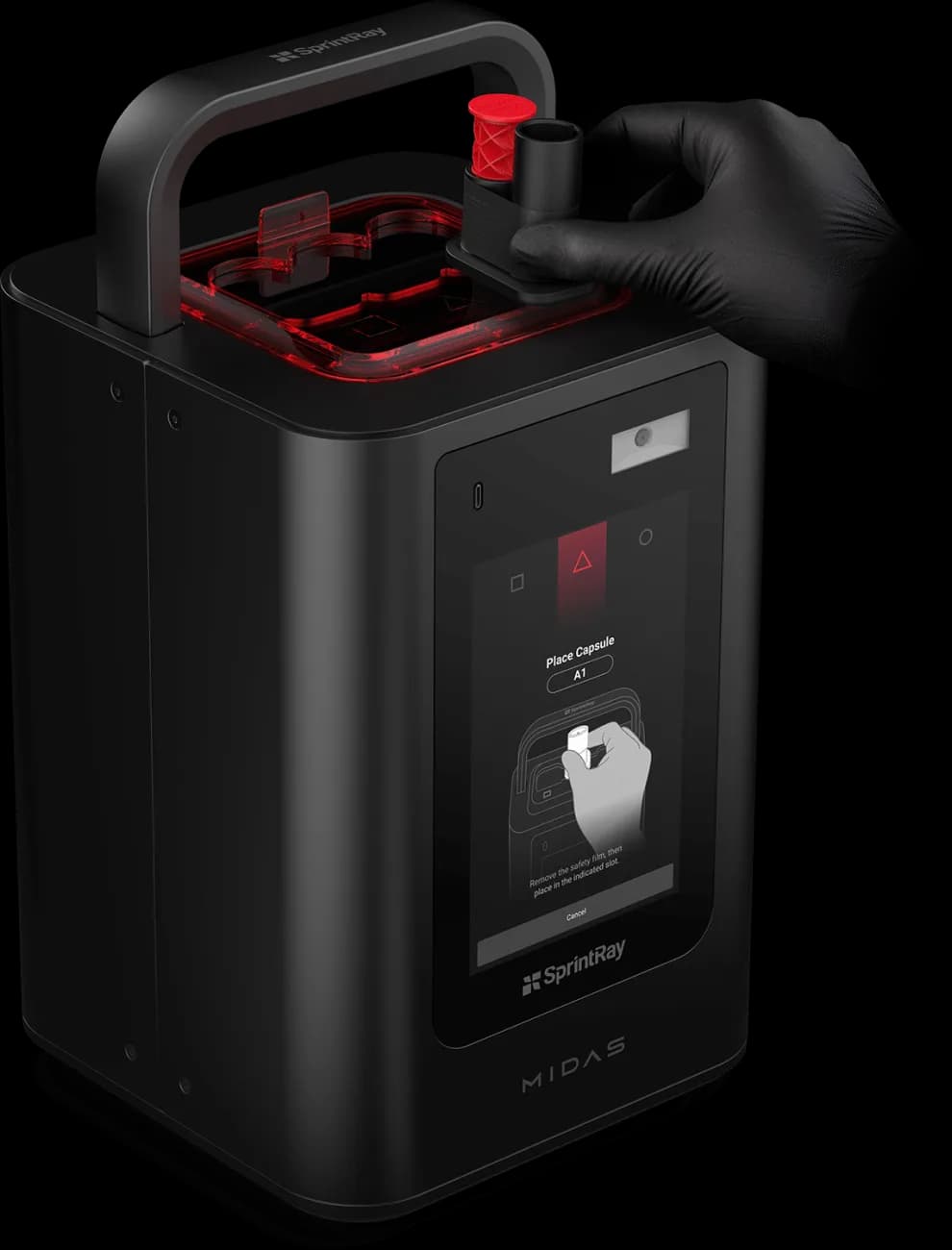
Scan. Place. Press.
Scan the capsule with the barcode scanner, place it where the screen shows, and Midas starts pressing once every capsule for the job is in. When it finishes, pull the tab on the build platform and the restoration is ready for post-processing.
- Automatic medical device tracking
- Capsule placement detection and a fully guided workflow
- Maintenance is wiping down the print glass: no resin tanks or build platforms
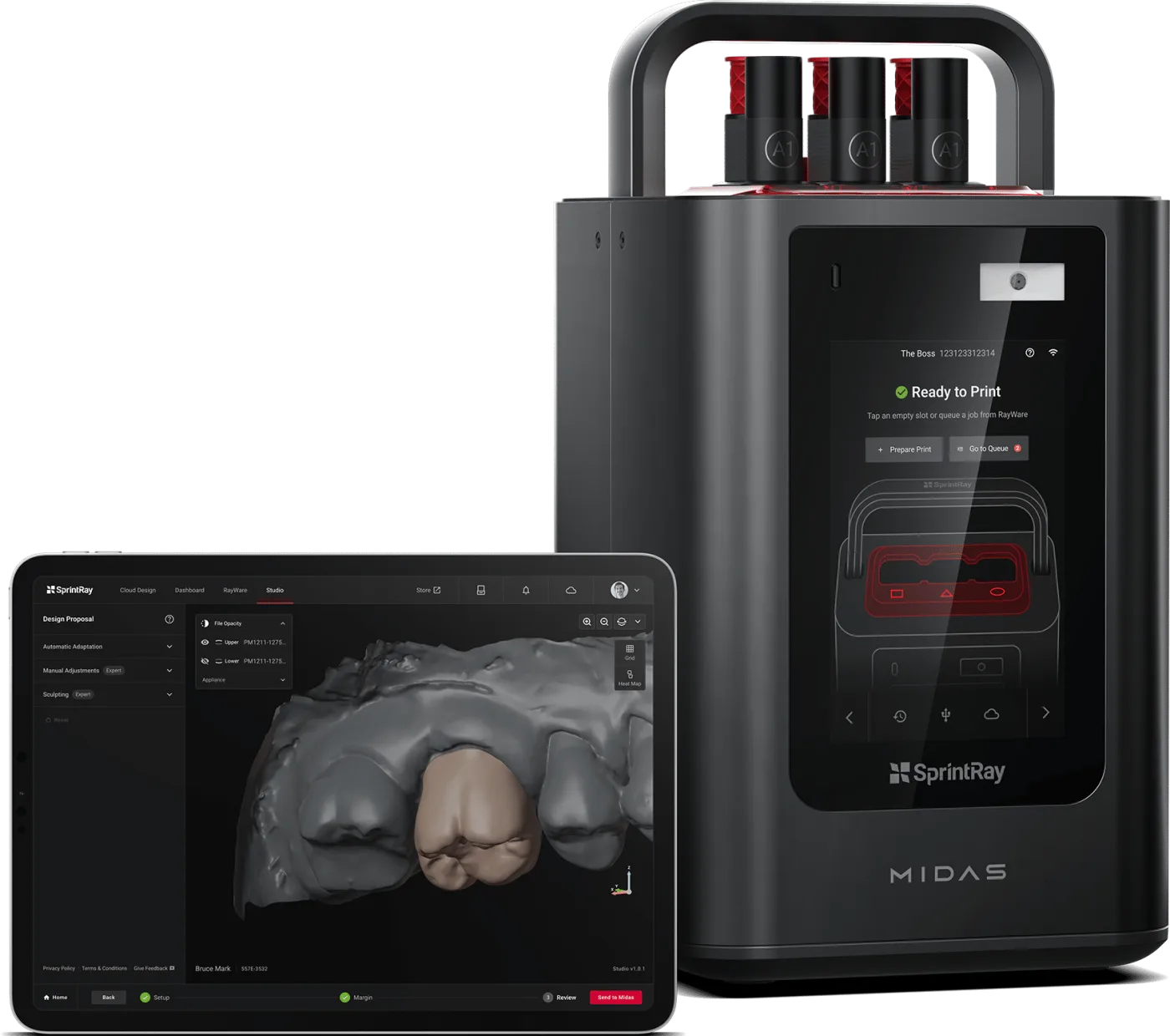
Easy design workflow
Midas AI Studio combines the convenience of AI design with the versatility of CAD in a simple, cloud-based suite. Upload the scans, confirm the automatic margin, make the final touches, then send the design straight to Midas.
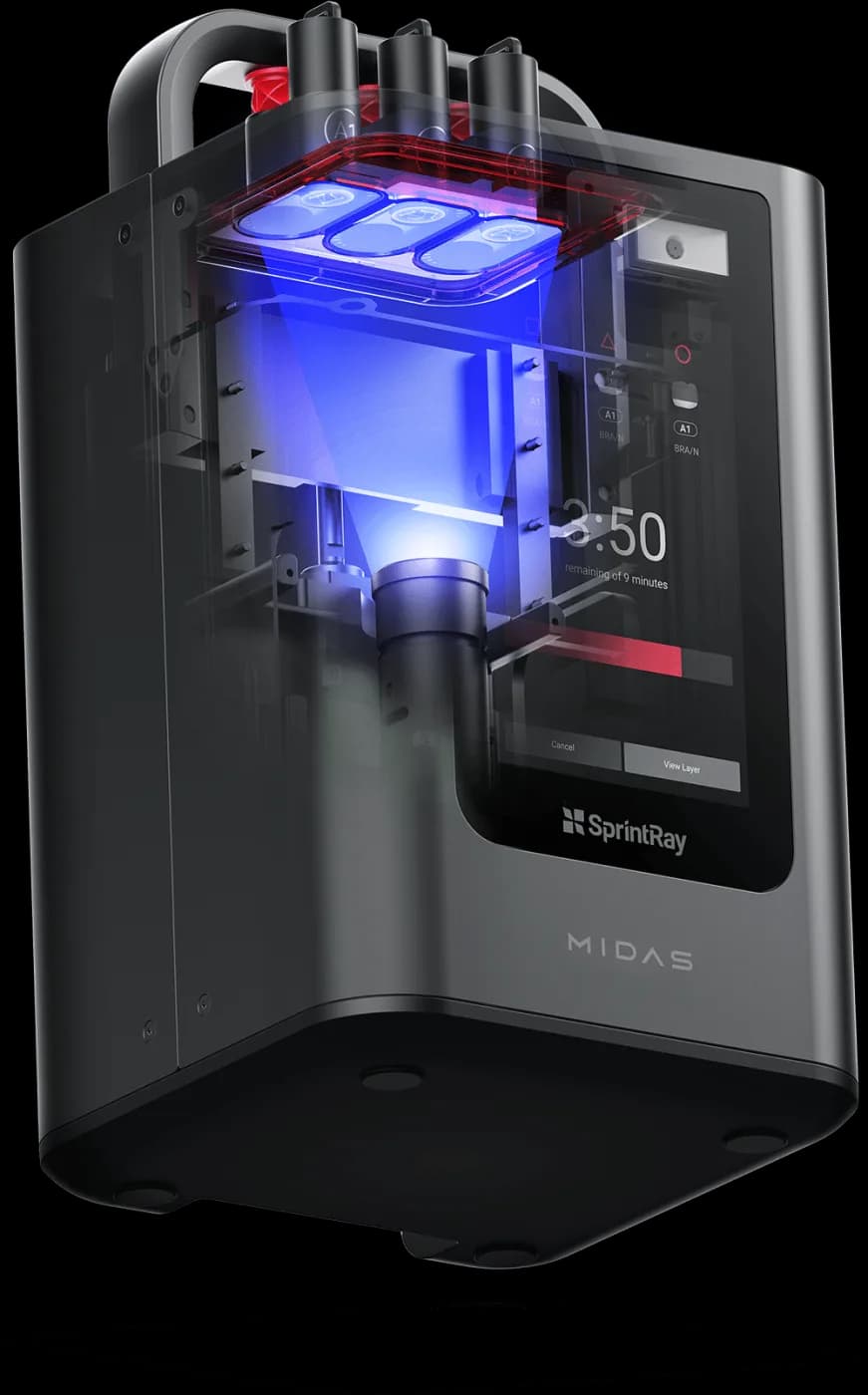
Digital Press Stereolithography
DPS uses hydrodynamic principles so the viscosity of the resin is no longer a barrier to speed or accuracy. A 45 µm projector delivers light directly to the print glass, with 385 nm UV-A for depth of cure control and a better surface finish.
What it prints
Restorations from Single Unit and Multi Unit capsules. The capsule materials we stock are linked.
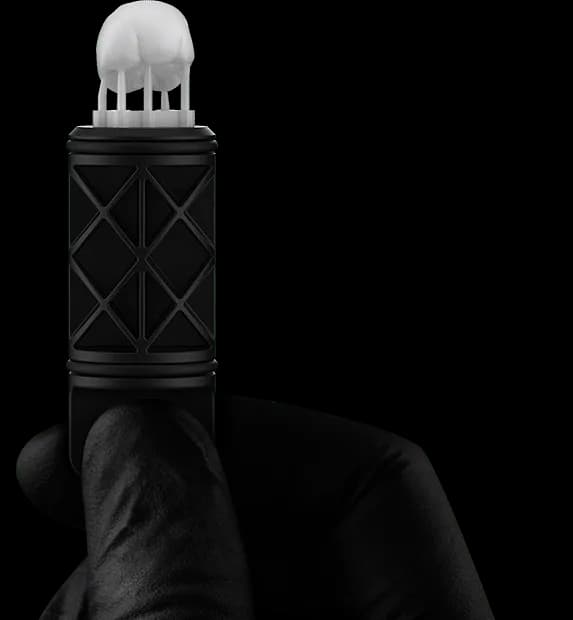
Full-contour posterior and anterior crowns, with lifelike aesthetics from very high filler content.
Ceramic Crown capsules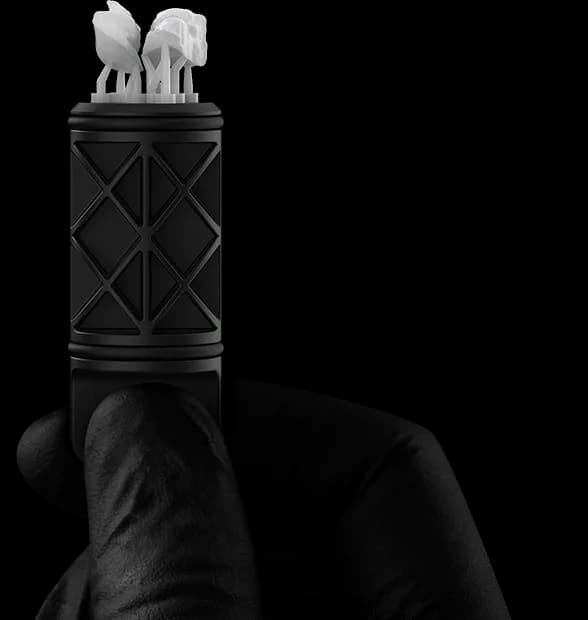
Complex shapes printed with pixel-perfect accuracy, up to 2 inlays per capsule.
Crown HT capsules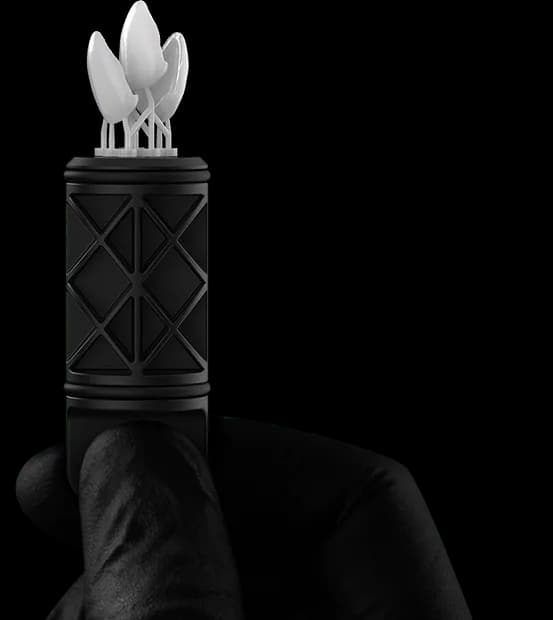
Up to 3 thin, strong veneers per capsule, prepped or no-prep.
Crown HT capsules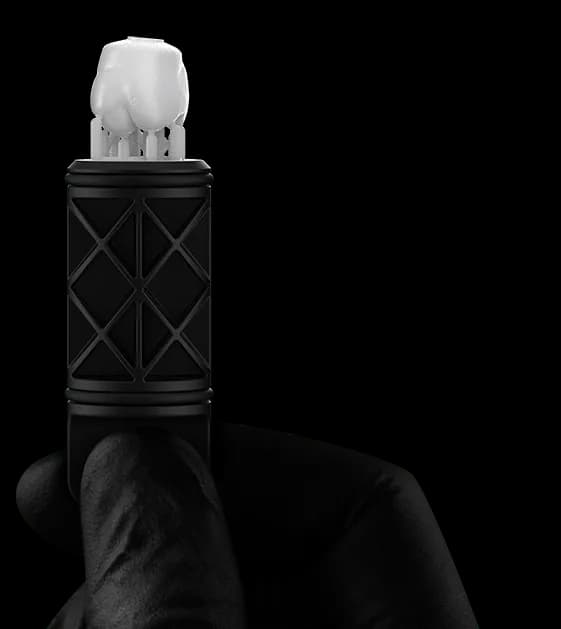
A clean screw channel, screw retained or cemented.
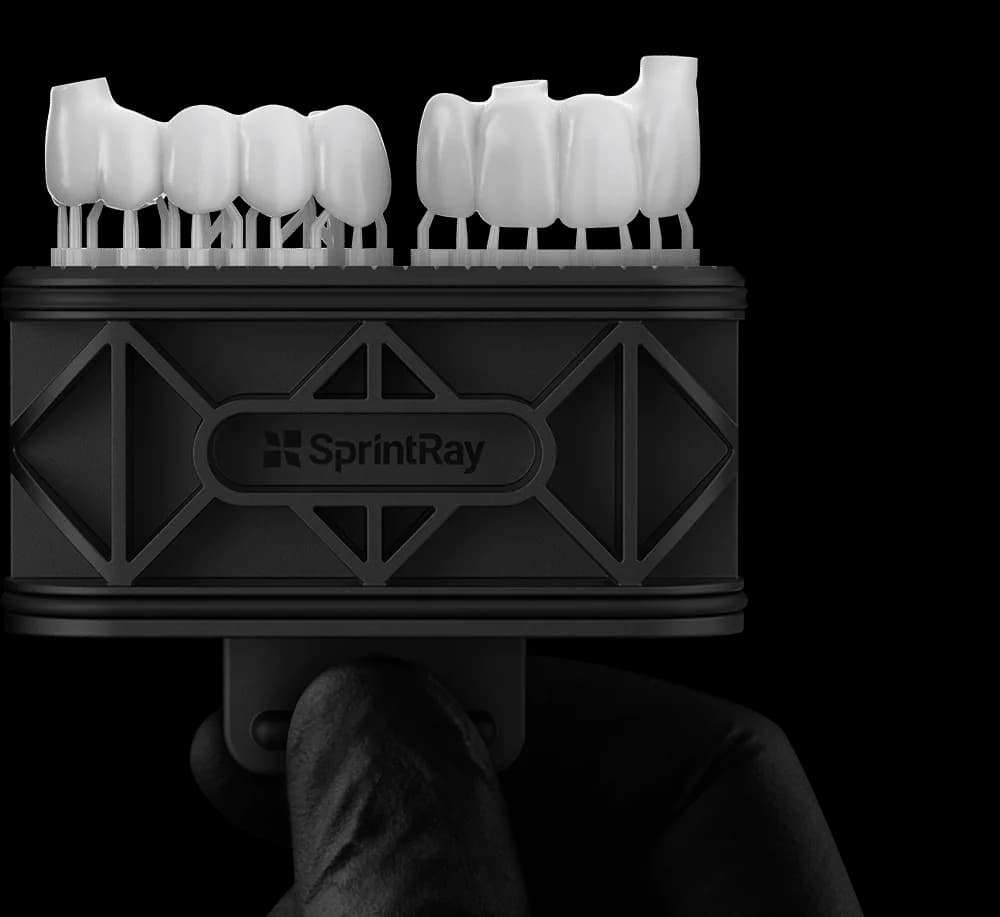
The Multi Unit capsule's larger print area suits temporary bridges, including on implants.
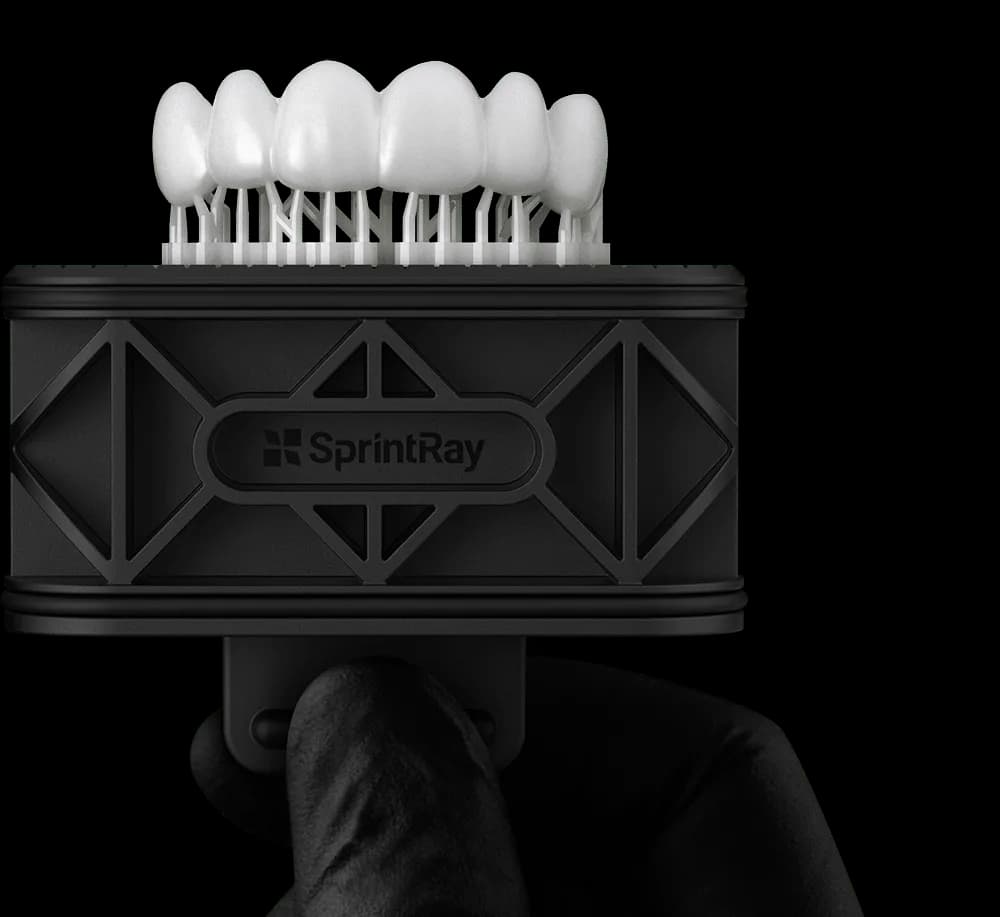
A full trial smile in one job, or the arch split in two for a quick snap-on smile.
Scan, design, press, wash, cure.
Midas and NanoCure: SprintRay's pairing to design, print and post-cure a crown in less than 30 minutes.
- 01 · ScanIntraoral scanner
Capture the case digitally, chairside.
See scanners - 02 · DesignRestoration design
AI design in SprintRay's Midas AI Studio, then send it straight to Midas.
- 03 · PrintSprintRay Midas
Digital Press Stereolithography: up to 3 capsules in less than 10 minutes.
You're here - 04 · Wash
 Midas ShakeWash
SprintRay's wash bottle for Midas build platforms, filled with IPA.
See ShakeWash - 05 · Cure
 SprintRay NanoCure
SprintRay's perfect pair for Midas: post-cure in NanoCure for best results.
See it
Specifications
- Print technology
- Viscosity-agnostic Digital Press Stereolithography (DPS)
- Light source
- 385 nm UV-A LED, SprintRay custom-built UV projector
- XY resolution
- 45 µm
- Print speed
- Up to 3 capsules in less than 10 minutes
- Print glass
- Heated, up to 3 capsules, removable print template
- Single Unit capsule
- Print volume 15 mm diameter, 20 mm height; 4 mL of resin
- Screen and software
- 7 in glass touchscreen, Android-based PrintOS
- Connectivity
- Dual-band Wi-Fi, Ethernet, front USB-C
- Power
- 100 to 240 V, 50 to 60 Hz, 140 W
- Operating temperature
- 21 to 29°C
- Size (W x D x H)
- 20 x 20 x 37 cm
- Shipping
- 33 x 47 x 35.5 cm, 11 kg
Questions
What happens after printing?
SprintRay's general workflow is to clean the restoration with IPA, then post-cure it in a NanoCure for best results. Each capsule material has its own instructions, so follow the ones for the material you're printing.
What maintenance does it need?
Wipe down the print glass. There are no resin tanks or build platforms to look after, because each capsule carries its own.
How much bench space does it take?
Midas is 20 x 20 cm and 37 cm tall, and NanoCure is 20 x 34.5 cm, so the pair fits a small bench.
Who installs and supports it?
Andarsyn. We install it at your practice or lab, every install includes training for your team, and as an authorised SprintRay service partner we look after maintenance, repairs and on-site visits after.
Product information and images: SprintRay. Sold, installed and supported in Australia by Andarsyn.
Add-ons and accessories.


Talk to us about Midas.
We install Midas at your practice, train your team on the day and service it after. Tell us what you restore and a person will come back with a quote.